
INTRODUCTION
Dental models play an essential role in preclinical research and teaching. Using human teeth presents ethical, legal, and logistical challenges, limiting their availability for experimental and educational studies. Bovine teeth have been frequently used in Mexico because of their structural similarities and availability in the livestock industry. 1
In this context, bovine teeth have emerged as a viable alternative due to their structural and chemical similarities to human teeth, making them an effective model for different applications. 2
This article analyzes the classification of cattle breeds in Mexico, their suitability to replace human teeth in dental studies, and bovine teeth’s structural and chemical properties. In addition, comparative tables are presented with data on the size, composition, and content of bovine teeth compared to humans.
DENTAL MODELS IN DENTISTRY:
Modern dentistry relies on scientific research and evidence-based practice to improve treatments and oral health. In this context, dental models play a critical role in providing a means for the preclinical evaluation of techniques and materials before their application in human patients. 3 Models can be natural, such as human and bovine teeth, or artificial, such as resin replicas and digital simulators.
TYPES OF DENTAL MODELS AND THEIR APPLICATIONS
Dental models are classified into various categories according to their origin and purpose:
Natural models: These include human and bovine teeth, broadly used in adhesion, abrasion, erosion, and biomaterial testing. 4 , 5
Artificial models: Made with synthetic resins or ceramics, they allow the standardization of comparative studies and the simulation of specific clinical conditions. 6
Digital models: Computerized dentistry has allowed the creation of virtual models that facilitate the planning of treatments and the simulation of occlusal forces. 7
IMPORTANCE OF DENTAL MODELS IN RESEARCH AND TEACHING
The use of dental models has allowed significant advances in different dentistry areas:
Biomaterial Evaluation: Facilitate adhesion and strength testing of new restorative materials before clinical use. 8
Training in restorative techniques: They provide dental students with a tool to develop manual skills without risk in patients. 9
Biomechanical analysis: They allow the study of the distribution of forces in restorations, implants, and dental prostheses. 10
LIMITATIONS AND CONSIDERATIONS
Despite its many advantages, the use of dental models has certain limitations:
Structural differences with human teeth: Artificial models may not accurately reproduce the microstructure of enamel and dentin, which can affect their mechanical and functional behavior. In addition, there are differences in human dental anatomy, such as crown morphology and dentin tubule arrangement, which may influence the validity of comparative studies. 11
Standardization of experimental conditions: It is essential to follow strict protocols in the collection, storage, and use of models to ensure the reproducibility of studies. 12
USE OF ANIMAL DENTAL MODELS IN DENTAL EXPERIMENTATION
Experimentation in dentistry requires models that allow treatments and biomaterials to be evaluated before their application in humans. Animal teeth have been demonstrated to be a viable alternative for in vitro and preclinical studies due to their anatomical and physicochemical characteristics comparable to those of human teeth. 1 3 In this context, selecting the appropriate model depends on the structural similarity, availability, and ethical considerations associated with its use. 13
MAIN ANIMAL DENTAL MODELS
Animal models used in dental experimentation include:
Bovine teeth: Broadly used due to their large size, availability, and structural similarity to human teeth, especially in dental adhesion and erosion studies. 14
Porcine teeth: They have a morphology and composition similar to human teeth, which makes them suitable for research in periodontics and implantology. 15
Sheep and goat teeth: Used in studies of bone regeneration and biocompatibility of biomaterials due to the similarity of their alveolar bone to the human one. 16
ETHICAL AND METHODOLOGICAL CONSIDERATIONS
The use of animal dental models in research should follow ethical principles that minimize suffering and promote the responsible use of these models. International regulations, such as those established by the International Committee on the Care and Use of Animals in Research, recommend the application of the principles of replacement, reduction, and refinement to ensure ethical practices in experimentation in accordance with the provisions of NOM-062-ZOO-1999. 17
IMPORTANCE OF USING BOVINE TEETH
The use of bovine teeth as models in dental research has gained relevance due to their morphological and histological similarities with human teeth and their accessibility and availability. This practice allows researchers and students to conduct in vitro studies and preclinical practices effectively and ethically. 18
Bovine teeth have a histological composition and anatomical shape that make them ideal for use as substitutes for human teeth in research on dental materials. 19
In addition, bovine tooth enamel has been used as an experimental model for dental research, providing updated information about bovine teeth characteristics relating to their use as substitutes for human teeth in research work. 20
However, recognizing the differences between bovine and human teeth, such as variations, is relevant. These differences must be considered when interpreting the results of the practices and when extrapolating conclusions to clinical practice. 21
Although bovine teeth have some anatomical similarities to human teeth, they are not identical; there are significant differences, such as variations in the enamel’s microhardness, the arrangement and density of the dentin tubules, and the dentin’s structural composition. These differences should be considered when interpreting the results of experimental practices and when extrapolating conclusions to clinical practice, as they can influence the biomechanical response and the interaction with dental materials. 22
JUSTIFICATION FOR THE USE OF BOVINE TEETH
Below is a classification of typical breeds and their main attributes:
| Race | Key features | Common Usage |
|---|---|---|
| Holstein | Uniform tooth size; Easy availability. | Adhesion and wear studies. |
| Brahman | High mechanical strength; thick enamel. | Testing of restorative materials. |
| Hereford | Homogeneous chemical composition; High durability. | Research in endodontic treatments. |
These animals’ teeth have structural characteristics similar to humans, making them ideal for dental studies. 24
BOVINE DIET
Cattle are ruminant herbivores. Their diet mainly consists of grass, hay, silage, and mineral and protein supplements. Diet influences tooth structure and wear. These are crucial aspects of research into dental materials. 25
REASONS FOR CHOOSING CATTLE AS DENTAL MODELS
Cattle are chosen due to several advantages:
Adequate tooth size: Teeth, especially premolars and molars, have dimensions similar to those of humans. 26
Availability: They are easy to obtain in slaughterhouses and farms. 27
Structure of enamel and dentin: The mineral and mechanical composition of bovine teeth resembles that of humans. 28
Reduced cost: Compared to primates or other models, cattle represent a more accessible and ethical alternative. 29
CLASSIFICATION AND ADVANTAGES OF BOVINE TEETH
Bovine teeth are classified according to their anatomical function and similarity to human teeth. 30 The main types used are:
Incisors: Due to their simple surface, they are ideal for dental aesthetics and adhesion studies. They offer a flat and uniform surface, facilitating the analysis of adhesive materials. 31
Premolars: Suitable for strength testing and restorative procedures. The larger size of premolars and molars allow for more complex procedures and comparison of advanced clinical techniques. 31
Molars: Used mainly in biomechanical studies and endodontic treatments. 31
DIMENSIONS OF BOVINE AND HUMAN TEETH
Table 2 shows a comparison of the average dimensions of bovine and human teeth, highlighting the key differences:
| Tooth Type | Length (mm) | Width (mm) | Enamel thickness (μm) |
|---|---|---|---|
| Bovine incisor | 15 - 20 | 6 - 8 | 300 - 400 |
| Human Incisor. | 10 – 12 | 5 - 7 | 200 – 300 |
| Bovine molar | 25 - 30 | 12 - 15 | 400 – 600 |
| Human molar | 20 - 25 | 10 - 12 | 300 - 500 |
CHEMICAL COMPOSITION OF ENAMEL AND DENTIN
The chemical composition of bovine teeth is comparable to that of human teeth in terms of hydroxyapatite, collagen, water, and mineral content, as shown in Table 3. 13
| Enamel | Dentin | |||
|---|---|---|---|---|
| Component | Human (%) | Bovine (%) | Human (%) | Bovine (%) |
| Hydroxyapatite | 96 | 95 | 70 | 68 |
| Collagen | 0 | 0 | 20 | 22 |
| Water | 4 | 5 | 10 | 10 |
| Minor minerals | <1 | <1 | <1 | <1 |
Human tooth enamel coats the dentin in its crown portion like a cap, providing a protective barrier against the underlying dentin and pulp. It is the hardest tissue in the body due to its high mineralization and the orderly arrangement of its prisms, which extend from the amelodentinal limit to the external surface in contact with the oral environment. Its hardness lies in the absence of collagen and its chemical composition, characterized by 95% inorganic matrix and 0.36 - 2% organic matrix, composed mainly of proteins and polysaccharides. 32
The inorganic component is made up of hydroxyapatite (HPA) crystals, composed of calcium phosphate and hydroxyl groups (Ca10[PO4]6[OH]2), with the possibility of incorporating ions such as magnesium, sodium, chlorine, potassium, carbonate, and fluorine, which modify their physicochemical properties. 33 Despite its structural similarity to other mineralized tissues such as bone, dentin, and cementum, enamel is distinguished by the greater density and size of its HPA crystals. 34
The structural unit of the enamel is the prism, which is made up of the compact arrangement of HPA crystals. However, its microscopic study is complex due to the optical interference generated by its crystalline composition and the variability in the orientation of the crystals within each prism. In addition, the enamel has secondary structural units caused by variations in the degree of mineralization, the arrangement of the prisms, the enamel-dentin interaction, and exposure to environmental factors. 35
From a morphological point of view, HPA crystals adopt an elongated hexagonal shape when observed in cuts perpendicular to their longitudinal axis. While in parallel cuts, they present a rectangular configuration. 36 These crystals are formed by the aggregation of unit cells, constituting the structural basis of crystalline minerals. 37
Water is the third component of enamel and is located on the periphery of the crystals, forming the so-called hydration layer. Deeper into the crystal, one finds the absorbed ions and compounds layer. The water content in the enamel progressively decreases with the age of the tooth, which influences its biomechanical properties. 38
The enamel formation process, known as amelogenesis, begins in the sixth week of intrauterine life. This phenomenon involves the synthesis of an organic matrix on which mineral salts are deposited. 37 Classically, dental embryogenesis is described in four successive stages: yolk, cap, bell and tooth follicle. 38 During this process, ameloblasts and intermediate stratum cells secrete the organic matrix of HPA enamel and crystals, resulting in their mineralization. 39
Three essential proteins are involved in this phase: amelogenin (90%), which regulates the initiation and growth of crystals; enamel (5%), involved in the nucleation and extension of crystals; and ameloblastin (5%), which participates in the differentiation of ameloblasts. After completing the enamel formation, the ameloblasts disappear by apoptosis during tooth eruption, which gives the enamel its acellular and highly mineralized character. 40
The hardness of enamel is due to its high HPA content, ranking fifth on the Mohs scale. 4 1 This gives it high resistance to abrasion and external forces, although it has low elasticity and depends on its water and organic matter content. 42 When dentin support is absent, the enamel is prone to macroscopic and microscopic fractures. In addition, its translucency varies according to the degree of mineralization, which influences the perception of its color, which ranges from yellowish-white to grayish-white. 43
Although enamel is highly impermeable, it can function as a semipermeable membrane, allowing the passage of water and specific ions present in the oral environment. Its high mineralization also gives it a remarkable radiopacity, facilitating its study using imaging techniques. 44
For dental research, the use of extracted human teeth requires institutional ethical approval. Given the difficulty of obtaining enough human teeth, teeth from different animal species have been used as an alternative. 45 It has been observed that the teeth of cattle, pigs, primates, sheep and horses have similar structural and physicochemical characteristics to human teeth, which allows their use in experimental studies. 46
Research has shown that bovine incisors, in particular, have been successfully used in adhesion studies, microfiltration, trace element analysis, and morphological evaluation. Ortiz Ruiz et al. 47 compared the enamel’s crystalline composition and dentin of various species, finding that human enamel has wider and lower crystals than other species but with higher structural similarity to bovine enamel.
For their part, Arango-Santander et al. 46 compared the microhardness of human and bovine enamel, finding similar values between the two, suggesting that bovine enamel could be a suitable experimental model for ex vivo studies in dental materials and shear resistance. However, it has been stated that the adhesion and tensile strength tests present some methodological heterogeneity, which requires a cautious interpretation of the results. 48
Recent studies have shown that the dehydration of enamel influences its mechanical properties, increasing its hardness and reducing the coefficient of friction. These findings suggest that dehydrated enamel could exhibit superior mechanical behavior to hydrated enamel, which has implications for the research and application of dental biomaterials. 49
BOVINE TEETH PREPARATION
Collection and storage
Bovine teeth are primarily sourced from slaughterhouses, where they are collected in sanitary conditions. To prevent biological degradation, they are stored in disinfectant solutions such as sodium hypochlorite. 50
Sterilization
Microbiological safety is guaranteed by methods such as autoclaving or immersion in disinfectant solutions, preserving the tooth structure. 51
Adaptation
The cutting and modeling of bovine teeth is done to replicate the dimensions of human teeth, optimizing their use in research and teaching. 52
BOVINE TEETH APPLICATIONS IN DENTAL RESEARCH
Bovine teeth have been used in studies, playing a crucial role in multiple research areas: 53
Adhesion studies:
They allow the strength of restorative materials bonding to the tooth structure to be evaluated. 54 Studies have shown that bovine teeth can help assess the adhesion of composite resins, resin cements, and other restorative materials, providing results comparable to those obtained with human teeth. 55 Recent research has explored the influence of different surface preparation protocols on the adhesion of materials, analyzing techniques such as acid etching, the application of universal adhesives, and laser or plasma activation.56.57
Despite these advantages, it is relevant to consider the differences in microstructure and chemical composition between bovine and human teeth. For example, the lower density of bovine enamel and its prismatic characteristics can affect the infiltration of adhesive systems, which could influence the long-term bond strength. 58 However, when standardized protocols are implemented and comparative studies conducted, bovine teeth remain a valuable tool for dental bonding research.
Research on erosion and abrasion:
They facilitate the analysis of the effects of acids and abrasive agents on the enamel structure. 59 Dental erosion and abrasion are wear processes that compromise the structural integrity of teeth and affect their long-term functionality. To study these phenomena, experimental models play a key role in dental research. 60
Dental erosion, mainly caused by exposure to extrinsic (food, drink) or intrinsic (gastric reflux) acids, has been investigated using bovine teeth in vitro. Research has evaluated the ability of different remineralizing agents, such as fluorides, hydroxyapatite nanoparticles, and biomaterials, to prevent acid wear. 61 , 62 Models based on bovine enamel have made it possible to analyze the mineral loss and effectiveness of protective strategies before their application in clinical studies.
On the other hand, dental abrasion, caused by mechanical factors such as excessive brushing or using abrasive toothpaste, has also been analyzed using bovine teeth. Studies have compared the wear resistance of different restorative materials and enamels treated with protective agents. 63 Although bovine enamel has differences in microstructure and mineral density compared to human enamel, its controlled use under standardized experimental conditions allows extrapolable results. 64
We understand that bovine teeth are a fundamental tool in dental erosion and abrasion research, facilitating the development and validation of preventive and therapeutic strategies. However, it is crucial to consider their limitations and complement the findings with studies in human teeth and clinical models to strengthen the validity of the results.
Biomaterial Testing:
They examine the durability and compatibility of composite resins, cement, and dental adhesives. 65 Bovine teeth are used as substrates in biomaterial adhesion research to evaluate resin cements, dental adherents, and protective coatings. Studies have shown that surface preparation protocols, such as acid etching and primer application, influence the bond strength between biomaterials and bovine dental tissue, providing valuable information for the optimization of restorative materials. 66 , 67
Likewise, bovine teeth have been used in mechanical resistance and wear tests of restorative materials. Research has evaluated the durability of composite resins, ceramics, and hybrid materials subjected to simulated masticatory forces, which makes it possible to predict their behavior in the oral cavity. 68 In addition, in biocompatibility studies, these teeth have been used to analyze the response of mineralized tissue to new biomaterials with remineralizing or antibacterial properties. 69
Despite its advantages, it is relevant to consider specific differences between bovine and human teeth, such as the higher porosity of bovine dentin and variations in enamel microstructure, which can influence the extrapolation of the results. However, when standardized methodologies are employed, bovine teeth are still an essential resource in the preclinical evaluation of dental biomaterials.
Teeth whitening tests:
They are used to investigate the use of bleaching agents on the enamel structure. 70 Teeth whitening is a procedure widely used in cosmetic dentistry to remove pigmentation and improve the appearance of teeth. To evaluate the effectiveness and safety of bleaching agents, it is necessary to have experimental models that simulate the structure of human enamel. 71
In laboratory studies, researches have examined the effectiveness of various peroxides, including hydrogen peroxide and carbamide peroxide, on bovine teeth. These studies also investigated how factors such as the concentration of the whitening agent, the application duration, and the use of light sources for activation affect the results. 72 In addition, they have made it possible to evaluate changes in the structure of the enamel, measuring parameters such as microhardness, surface roughness, and mineral loss after whitening treatments. 73
Another relevant application of bovine teeth in teeth whitening trials is the comparison of strategies to reduce adverse effects, such as tooth sensitivity and demineralization. Research has explored the use of remineralizing agents, such as hydroxyapatite and fluoride, to counteract the erosive effects of bleaching products and preserve the structural integrity of enamel. 74
Although bovine teeth have specific differences from human teeth, such as higher permeability of the enamel and a slightly different prismatic arrangement, their use in controlled experimental conditions allows us to obtain valuable information on the safety and efficacy of whitening treatments before their application in clinical practice. 75
CONSIDERATIONS IN THE USE OF BOVINE TEETH
Despite their advantages, the use of bovine teeth in dental research requires certain precautions:
Structural variability: Factors such as the age of the animal and its diet can influence the composition of the enamel and dentin. 76
Differences in dentin permeability: Although similar to human dentin, bovine dentin has higher permeability, which can affect the interpretation of adhesion studies. 77
Need for standardization: It is essential to establish uniform protocols for sample collection, storage, and preparation to ensure the reproducibility of the results. 78
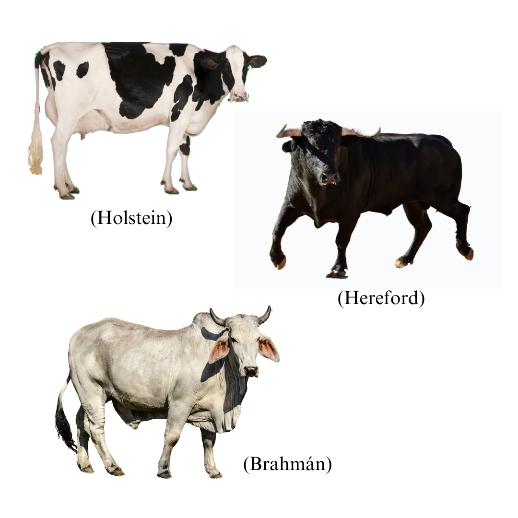
Mexico has several cattle breeds, including:
Meat breeds (examples: Charolais, Brahman, Beefmaster)
Dairy breeds (examples: Holstein, Jersey)
Dual-purpose breeds (examples: Simmental, Swiss Brown)
Figure 1 shows the cattle breeds used in dentistry and selected according to specific characteristics such as size, structure, and availability. 79
PRECLINICAL TEACHING
In preclinical dental training in Mexico, using bovine teeth as models for practices and studies has gained relevance due to their similarities with human teeth and easy access. This practice allows students to develop clinical skills in a controlled environment before caring for real patients. 80
Bovine teeth share histological and morphological features with humans, making them viable substitutes for dental teaching and research, considering the difference between tooth size and structure. Its use in preclinical activities facilitates understanding procedures such as cavity preparation and applying restorative materials and adhesion techniques. In addition, as they are more accessible and economical than human teeth, they represent a practical alternative for educational institutions. 81
However, it is important to recognize differences between bovine and human teeth, such as variations in the enamel microhardness and the structure of the dentin. One of the main differences is the size, as bovine teeth are significantly larger than humans, which can affect the distribution of forces and the adhesion of dental materials. 14 , 30
In addition, the morphology and arrangement of dental tissues also vary. For example, bovine dentin has more dentin tubules and a different orientation compared to human dentin, which can influence material leakage and structural strength. Also, the thickness of the enamel is different, which can alter the response to restorative and bonding procedures. 13 , 30
For these reasons, although bovine teeth are frequently used in dental research due to their availability and overall structural similarity, it is crucial to acknowledge and consider these differences to interpret accurately the results and their clinical application. 82
Although in Mexico, there is no specific data on the prevalence of using bovine teeth in preclinical education, several institutions have adopted this practice due to its pedagogical and logistical advantages. The use of bovine teeth in preclinical training contributes to developing technical competencies in students, effectively preparing them for their future professional practice. 83
Incorporating bovine teeth in preclinical dental teaching in Mexico offers a valuable tool for student training, allowing the acquisition of practical skills in a safe and controlled environment. 64 However, it is essential that educators are aware of the limitations and differences between bovine and human teeth to ensure comprehensive and accurate training. 84
CONCLUSION
Due to their chemical and structural similarities, using bovine teeth as models in dentistry represents an ethical, economic, and scientifically valid solution to human teeth. Therefore, it is a viable alternative for dentistry research and teaching in Mexico.
References
- Yassen GH Platt JA Hara AT Bovine teeth as substitute for human teeth in dental research: a review of literature J. Oral Sci. 2011 53 3 273 82
- Goetz K Gutermuth AC Wenz HJ Groß D Hertrampf K Ethical issues in dental education-A cross-sectional study with pre-clinical and clinical dental students Eur. J. Dent. Educ. 2024 28 3 833 9
- Soares FZ Follak A da Rosa LS Montagner AF Lenzi TL Rocha RO Bovine tooth is a substitute for human tooth on bond strength studies: A systematic review and meta-analysis of in vitro studies Dental Materials 2016 32 11 1985 93
- Ferracane JL Models of caries formation around dental composite restorations J. Dent. Res. 2017 96 4 364 71
- Gelio MB Zaniboni JF Monteiro Jcc Besegato JF Pereira JR Buchaim RL Medium-term evaluation of the bond strength and dentin penetration of self-adhesive resin cements to root dentin Aust. Dent. J. 2024 69 2 93 101
- Anido-Anido A Amore R Lewgoy H Anauate-Netto C da Silva T de Paiva Gonçalves S Comparative study of the bond strength to human and bovine dentin in three different depths Braz. Dent. Sci. 2012 15 2 56 62
- Ferreira Figueiredo de Carvalho M Neiva Leijôto-Lannes AC Nunes de Rodrigues MC Capanema Nogueira L Lyrio Ferraz NK Nogueira Moreira A Viability of Bovine Teeth as a Substrate in Bond Strength Tests: A Systematic Review and Meta-analysis J. Adhes. Dent. 2018 20 6 471 9
- Revilla-León M Sadeghpour M Özcan M An update on applications of 3D printing technologies used for processing polymers used in implant dentistry Odontology 2020 108 3 331 8
- Baena Lopes M Coelho Sinhoreti MA Correr Sobrinho L Consani S Coparative study of the dental substrate used in shear bond strength tests Pesqui. Odontol. Bras. 2003 17 2 171 5
- Perry S Bridges SM Burrow MF A review of the use of simulation in dental education Simul. Healthc. 2015 10 1 31 7
- Bakeman EM Rego N Chaiyabutr Y Kois JC Influence of ceramic thickness and ceramic materials on fracture resistance of posterior partial coverage restorations Oper. Dent. 2015 40 2 211 7
- Reis AF Giannini M Kavaguchi A Soares CJ Line SRP Comparison of microtensile bond strength to enamel and dentin of human, bovine and porcine teeth J. Adhes. Dent. 2004 6 2 117 21
- Kajishima Konno AN Coelho Sinhoreti MA Consani S Correr Sobrinho L Xediek Consani RL Storage effect on the shear bond strength of adhesive systems Braz. Dent. J. 2003 14 1 42 47
- Attin T Wegehaupt F Gries D Wiegand A The potential of deciduous and permanent bovine enamel as substitute for deciduous and permanent human enamel: Erosion-abrasion experiments J. Dent. 2007 35 10 773 7
- Scherrer SS Cesar PF Swain MV Direct comparison of the bond strength results of the different test methods: a critical literature review Dent. Mater. 2010 26 2 e78 93
- Goracci C Sadek FT Monticelli F Cardoso PEC Ferrari M Influence of substrate, shape, and thickness on microtensile specimens' structural integrity and their measured bond strengths Dent. Mater. 2004 20 7 643 54
- Oshiro Tanaka JL Medici Filho E Pereira Salgado JA Castillo Salgado MA de Moraes LC de Moraes MEL Comparative analysis of human and bovine teeth: radiographic density Braz. Oral. Res. 2008 22 4 346 51
- Khvostenko D Hilton TJ Ferracane JL Mitchell JC Kruzic JJ Bioactive glass fillers reduce bacterial penetration into marginal gaps for composite restorations Dent. Mater. 2016 32 1 73 81
- Alamdarloo Y Mosaddad SA Golfeshan F Mechanical properties of combined packable and high-filled flowable composite used for the fixed retainer: an in vitro study BMC. Oral. Health. 2024 24 1 676
- Rüttermann S Braun A Janda R Shear bond strength and fracture analysis of human vs. bovine teeth PLoS. One. 2013 8 3 e59181
- Franchini Pan Martinez L Ferraz Nayara KL Lannes Amanda CNL Rodrigues MC De Carvalho MF Zina LG Can bovine tooth replace human tooth in laboratory studies? A systematic review J. Adhes. Sci. Technol. 2023 37 7 1279 98
- Ortiz-Ruiz AJ Teruel-Fernández JD Alcolea-Rubio LA Hernández-Fernández A Martínez-Beneyto Y Gispert-Guirado F Structural differences in enamel and dentin in human, bovine, porcine, and ovine teeth Ann. Anat. 2018 218 7 17
- National Research Council Guide for the Care and Use of Laboratory Animals 8th ed. Washington, DC National Academies Press 2011
- Cochrane S Burrow MF Parashos P Effect on the mechanical properties of human and bovine dentine of intracanal medicaments and irrigants Aust. Dent. J. 2019 64 1 35 42
- Lee JJ Nettey-Marbell A Cook Jr A Pimenta LAF Leonard R Ritter AV Using extracted teeth for research: the effect of storage medium and sterilization on dentin bond strengths J. Am. Dent. Assoc. 2007 138 12 1599 603
- Callejas Juárez N Salas González JM Estructura de la red de mercado de bovinos en México, 2017-2021 Rev. Mex. de cienc. pecuarias. 2023 14 4 745 59
- Krifka S Börzsönyi A Koch A Hiller KA Schmalz G Friedl KH Bond strength of adhesive systems to dentin and enamel—human vs. bovine primary teeth in vitro Dent. Mater. 2008 24 7 888 94
- Oesterle LJ Shellhart WC Belanger GK The use of bovine enamel in bonding studies Am. J. Orthod. Dentofacial Orthop. 1998 114 5 514 9
- de Oliveira da Rosa WL Piva E Fernandes da Silva A Bond strength of universal adhesives: a systematic review and meta-analysis J. Dent. 2015 43 7 765 76
- Bin AlShaibah WM El-Shehaby FA El-Dokky NA Reda AR Comparative study on the microbial adhesion to preveneered and stainless steel crowns J. Indian Soc. Pedod. Prev. Dent. 2012 30 3 206 11
- Sahebi S Sobhnamayan F Hasani S Mahmoodi N Dadgar D Bovine and Ovine Teeth as a Substitute for the Human Teeth: An Experimental Study J. Dent. (Shiraz). 2024 25 2 132 7
- Castellanos JE Marín Gallón LM Úsuga Vacca MV Castiblanco Rubio GA Martignon Biermann S La remineralización del esmalte bajo el entendimiento actual de la caries dental Univ. Odontol. 2013 32 69 49 59
- Bartlett JD Simmer JP New perspectives on amelotin and amelogenesis J. Dent. Res. 2015 94 5 642 4
- Durso G Tanevitch A Abal A Llompart G Pérez P Felipe P Estudio de la micrestructura del esmalte dental humano en relación con la microdureza y la composición química Rev. Cs. Morfol. 2017 19 2 1 9
- Teruel JD Alcolea A Hernández A Ortiz Ruiz AJ Comparison of chemical composition of enamel and dentine in human, bovine, porcine and ovine teeth Arch. Oral Biol. 2015 60 5 768 75
- Cople Maia LC Ribeiro de Souza IP Aparecido Cury J Effect of a combination of fluoride dentifrice and varnish on enamel surface rehardening and fluoride uptake in vitro Eur. J. Oral. Sci. 2003 111 1 68 72
- Yilmaz ED Koldehoff J Schneider GA On the systematic documentation of the structural characteristics of bovine enamel: A critic to the protein sheath concept Dent. Mat. 2018 34 10 1518 30
- Hurtado PM Tobar-Tosse F Osorio J Orozco L Moreno F Amelogénesis imperfecta: Revisión de la literatura Rev. Estomatol. 2015 23 1 32 41
- Hinostroza Izaguirre MC Navarro Beteta RJ Abal Perleche DM Perona Miguel de Priego G Factores genéticos asociados a la hipomineralización incisivo-molar. Revisión de literatura Rev. Cient. Odontol. 2019 7 1 148 56
- Bronckers ALJJ Ion transport by ameloblasts during amelogenesis J. Dent. Res. 2017 96 3 243 53
- Ghadimi E Eimar H Marelli B Nazhat SN Asgharian M Vali H Trace elements can influence the physical properties of tooth enamel Springerplus 2013 2 1 499
- Schmeling M Selección de color y reproducción en odontología. Parte 3: Escogencia del color de forma visual e intrumental ODOVTOS-Int. J. Dental Sci. 2017 19 1 23 32
- Reyes-Gasga J Estudio del esmalte dental humano por microscopía electrónica Pädi Boletín Científico de Ciencias Básicas e Ingenierías del ICBI. 2021 9 Especial2 1 6
- Kiani AK Pheby D Heneghan G Brown R Sieving P Sykora P Ethical considerations regarding animal experimentation J. Prev. Med. Hyg. 2022 63 2 Suppl 3 E255 66
- da Silva CL Cavalheiro CP Gimenez T Imparato JCP Bussadori SK Lenzi TL Bonding performance of universal and contemporary adhesives in primary teeth: a systematic review and network meta-analysis of in vitro studies Pediatr. Dent. 2021 43 3 170 7
- Arango-Santander S Montoya C Peláez-Vargas A Ossa EA Chemical, structural and mechanical characterization of bovine enamel Arch. Oral Biol. 2020 109 104573
- Möhring S Cieplik F Hiller KA Ebensperger H Ferstl G Hermens J Elemental compositions of enamel or dentin in human and bovine teeth differ from murine teeth Materials. (Basel). 2023 16 4 1514
- Atash R Van den Abbeele A Bond strengths of eight contemporary adhesives to enamel and to dentine: an in vitro study on bovine primary teeth Int. J. Paediatr. Dent. 2005 15 4 264 73
- Hua LC Wang WY Swain MV Zhu CL Huang HB Du ZR The dehydration effect on mechanical properties of tooth enamel J. Mech. Behav. Biomed. Mater. 2019 95 210 4
- Hiraishi N Gondo T Shimada Y Hill R Hayashi F Crystallographic and Physicochemical Analysis of Bovine and Human Teeth Using X-ray Diffraction and Solid-State Nuclear Magnetic Resonance J. Funct. Biomater. 2022 13 4 254
- Moosavi H Hajizadeh H Mamaghani ZSZ Rezaei F Ahrari F Comparison of various methods of restoring adhesion to recently bleached enamel BMC Oral Health. 2024 24 1 942
- Lezcano MR Enz N Affur MC Gili MA Histological characteristics of bovine dentin using Masson's Trichrome staining Rev. Cient. Odontol. (Lima). 2023 11 4 e176
- Körner P Gerber SC Gantner C Hamza B Wegehaupt FJ Attin T A laboratory pilot study on voids in flowable bulk-fill composite restorations in bovine Class-II and endodontic access cavities after sonic vibration Sci. Rep. 2023 13 1 18557
- Baia JCP Oliveira RP Ribeiro MES Lima RR Loretto SC Silva E Souza MH Influence of prolonged dental bleaching on the adhesive bond strength to enamel surfaces Int. J. Dent. 2020 2020 1 2609359
- Koizumi H Nakayama D Komine F Blatz MB Matsumura H Bonding of resin-based luting cements to zirconia with and without the use of ceramic priming agents J. Adhes. Dent. 2012 14 4 385 92
- Frankenberger R Reinelt C Petschelt A Krämer N Operator vs. material influence on clinical outcome of bonded ceramic inlays Dent. Mater. 2009 25 8 960 8
- Borges GA Sophr AM de Goes MF Correr Sobrinho L Chan DCN Effect of etching and airborne particle abrasion on the microstructure of different dental ceramics J. Prosthet. Dent. 2003 89 5 479 88
- Reis AF Giannini M Lovadino JR Ambrosano GM Effects of various finishing systems on the surface roughness and staining susceptibility of packable composite resins Dent. Mater. 2003 19 1 12 8
- Magalhães AC Wiegand A Rios D Marques Honório H Afonso Rabelo Buzalaf M Insights into preventive measures for dental erosion J. Appl. Oral Sci. 2009 17 2 75 86
- Lussi A Carvalho TS The future of fluorides and other protective agents in erosion prevention Caries Res. 2015 49 Suppl 1 18 29
- Hove LH Holme B Young A Tveit AB The protective effect of TiF4, SnF2 and NaF against erosion-like lesions in situ Caries Res. 2008 42 1 68 72
- Ganss C Schlueter N Hardt M von Hinckeldey J Klimek J Effects of toothbrushing on eroded dentine Eur. J. Oral Sci. 2007 115 5 390 6
- Amaechi BT Higham SM Dental erosion: possible approaches to prevention and control J. Dent. 2005 33 3 243 52
- Borouziniat A Majidinia S Shirazi AS Kahnemuee F Comparison of bond strength of self-adhesive and self-etch or total-etch resin cement to zirconia: a systematic review and meta-analysis J. Conserv. Dent. Endod. 2024 27 2 113 25
- Chatterjee N Ghosh A Current scenario on adhesion to zirconia; surface pretreatments and resin cements: A systematic review J. Indian Prosthodont. Soc. 2022 22 1 13 20
- Vogl V Hiller KA Buchalla W Federlin M Schmalz G Controlled, prospective, randomized, clinical split-mouth evaluation of partial ceramic crowns luted with a new, universal adhesive system/resin cement: results after 18 months Clin. Oral. Investig. 2016 20 9 2481 92
- Unsal KA Karaman E Effect of additional light curing on colour stability of composite resins Int. Dent. J. 2022 72 3 346 52
- Devlukia S Hammond L Malik K Is surface roughness of direct resin composite restorations material and polisher-dependent? A systematic review J. Esthet. Restor. Dent. 2023 35 6 947 67
- Kwon SR Wertz PW Review of the Mechanism of Tooth Whitening J. Esthet. Restor. Dent. 2015 27 5 240 57
- Joiner A Whitening toothpastes: a review of the literature J. Dent. 2010 38 Suppl 2 e17 24
- Nunes Leite Lima DA Faria e Silva AL Baggio Aguiar FH Liporoni PCS Munin E Bovi Ambrosano GM In vitro assessment of the effectiveness of whitening dentifrices for the removal of extrinsic tooth stains Braz. Oral Res. 2008 22 2 106 11
- Torres CR Wiegand A Sener B Attin T Influence of chemical activation of a 35% hydrogen peroxide bleaching gel on its penetration and efficacy—an in vitro study J. Dent. 2010 38 10 838 46
- Bayne SC Correlation of clinical performance with 'in vitro tests' of restorative dental materials that use polymer-based matrices Dent. Mater. 2012 28 1 52 71
- Saleh F Taymour N Validity of using bovine teeth as a substitute for human counterparts in adhesive tests East. Mediterr. Health J. 2003 9 1-2 201 7
- Dunn WJ Söderholm KJ Comparison of shear and flexural bond strength tests versus failure modes of dentin bonding systems Am. J. Dent. 2001 14 5 297 303
- DeWald JP The use of extracted teeth for in vitro bonding studies: a review of infection control considerations Dent. Mater. 1997 13 2 74 81
- Richter C Jost-Brinkmann PG Shear bond strength of different adhesives tested in accordance with DIN 13990-1/-2 and using various methods of enamel conditioning J. Orofac. Orthop. 2015 76 2 175 87
- Osorio R Pisani-Proença J Erhardt MC Osorio E Aguilera FS Tay FR Resistance of ten contemporary adhesives to resin-dentine bond degradation J. Dent. 2008 36 2 163 9
- Gomes de Oliveira S Kotowski N Rodrigues Sampaio-Filho H Baggio Aguiar FH Rivera Dávila AM Jardim R Metalloproteinases in Restorative Dentistry: An In Silico Study toward an Ideal Animal Model Biomedicines. 2023 11 11 3042
- Lezcano MR Dientes bovinos en odontología: Use of Bovine Teeth in Dentistry Rev. Odontol. Científica Chilena. 2023 2 1 31 6
- Posada MC Sánches CF Gallego GJ Peláez Vargas A Restrepo LF López JD "Dientes de bovino como sustituto de dientes humanos para su uso en la odontología". Revisión de literatura Rev. CES. Odontol. 2006 19 1 63 8
- Yavuz I Tumen EC Kaya CA Dogan MS Gunay A Unal M The reliability of microleakage studies using dog and bovine primary teeth instead of human primary teeth Eur. J. Paediatr. Dent. 2013 14 1 42 6
- Reeves GW Fitchie JG Hembree Jr JH Puckett AD Microleakage of new dentin bonding systems using human and bovine teeth Oper. Dent. 1995 20 6 230 5
- Jasinevicius TR Landers M Nelson S Urbankova A An evaluation of two dental simulation systems: virtual reality versus contemporary non-computer-assisted J. Dent. Educ. 2004 68 11 1151 62