
INTRODUCTION
Animal model-based research has been conducted for a long time. Since the 5th century BC, experiments with animals have been documented, but their use increased significantly in the 19th century. 1 In most medical research centers around the world, non-human animals are used as part of scientific studies. These animals help deepen the understanding of diseases that affect humans and explore possible therapeutic solutions.² Although some species, such as the fruit fly (Drosophila melanogaster), the zebrafish (Danio rerio), and the worm Caenorhabditis elegans, are evolutionarily distant from humans, they share physiological and genetic characteristics that make them valuable tools for medical progress. Thanks to these similarities, animal research has been fundamental in advancing medical science. 2 , 3
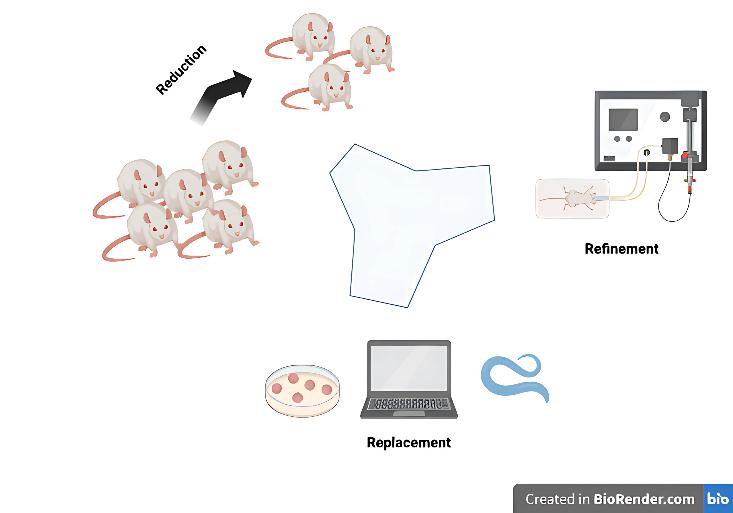
The use of animals in biomedical research remains a topic of public and scientific debate. While some people may oppose animal research, social acceptance continues. However, it has also been observed that public support is conditional, varying depending on the availability of alternatives, the minimization of harm to animals, and the potential benefits for human and/or animal health. 4 This variability highlights the importance of guarantees, whether assumed or demanded by different public groups, that ensure research governance and scientific practices meet expected standards. The relationships between the State, science, and social trust are therefore crucial for the social acceptance of laboratory animal research; however, they are also controversial and ever-changing. 5 , 6 Ideas about socially acceptable experimental practices involving laboratory animals have evolved over time in response to changes within science and society. 7 , 8 , 9 , 10 As laboratory animal research expands internationally, with a focus on obtaining medically applicable results and increasing demands for transparency, it is essential not to take social support for these practices for granted. Instead, it is crucial to consider these social relationships when designing and planning future research projects, as they will also vary depending on geographical location. 4 The first formal presentation of the 3Rs concept (Replacement, Reduction, and Refinement, Fig. 1 ) took place at the UFAW Symposium in 1957. 11 , 12 Two years later, W. Russell and R. Burch published The Principles of Humane Experimental Technique. In this book, three fundamental principles were defined. The first, Replacement, was defined as "the substitution of conscious higher animals with insentient material." The second, Reduction, was understood as "the decrease in the number of animals used to obtain a specific quantity and precision of information." Finally, the third principle, Refinement, was described as "any decrease in the incidence or severity of inhumane procedures applied to those animals that must still be used". 11 The use of animals in research is regulated by ethics committees that evaluate research protocols. 13 National and international laws are based on the 3Rs principle (Replacement, Reduction, and Refinement), proposed by Russell and Burch in 1959. Some researchers have added a fourth "R": Responsibility: promoting animal welfare and ethical discussion about their use. 14 , 15 To promote and protect animal welfare, Latin American and other countries worldwide have incorporated animal welfare provisions into their laws. Ideally, animal welfare legislation should reflect both science and ethical perspectives, addressing welfare issues in a multidisciplinary manner. 16
LAWS, GUIDELINES, AND REGULATIONS ON THE USE OF LABORATORY ANIMALS
Currently, there are guidelines and laws for the management of laboratory animals that guide work with biomodels toward their responsible and ethical use. Some representative examples include: The Guide for the Care and Use of Laboratory Animals, a publication from the National Research Council (USA), Directive 2010/63/EU of the European Union, which protects animals used for scientific purposes, the guidelines from the Canadian Council on Animal Care, and the NOM-062-ZOO-1999 in Mexico. These regulations protect animals used for scientific purposes with the primary objective of achieving high-quality and reproducible results.
REDUCTION ACTIONS
One of the most notable efforts, in addition to being a clear example of reduction in the use of laboratory animals, is the restriction of animal experimentation for the evaluation of cosmetic product safety, a movement that began in Europe during the 1990s. This restriction was fully implemented by 2013. Meanwhile, countries such as Turkey, India, Taiwan, South Korea, New Zealand, and Guatemala have followed the European initiative. Other countries are considering implementing the ban, including Ukraine, Russia, Argentina, Chile, Colombia, Canada, Brazil, Japan, the United States, and Australia. 17 Another example is the case of regulated testing with laboratory animals, such as acute toxicity evaluation to determine the median lethal dose of substances following the guidelines of the Organization for Economic Cooperation and Development (OECD), where the method has been standardized using the lowest possible number of animals in the process. 18
The use of in vitro study methods has significantly contributed to achieving the objective of the reduction principle. The implementation of cell cultures from certain cell lines derived from biomodels such as rodents has led to important advances in both animal and human health. 19 It is important to highlight the use of pilot studies, which help adjust research protocols, and validate or correct the experimental approach. Pilot studies involving a small number of animals can provide useful information on welfare indicators, especially in unpredictable situations such as new compounds or experimental designs. Their results help define criteria for the main study and potential improvements. 20 In 2022, Schepelmann et al. conducted a pilot study titled: "Colorectal cancer associated with colitis induced by AOM/DSS in 14-month-old female Balb/C and C57BL/6 mice: A pilot study," demonstrating that older animals from both mouse strains can be used for colorectal cancer studies, allowing research into aging in its development and phenotype. 21
REPLACEMENT ACTIONS
The principle of replacement has driven the development of alternative methodologies that avoid the use of biomodels as experimental subjects. In this context, cell culture models, such as immortal myoblastic cell lines derived from mice (C2C12), rats (L6), and dogs (MyoK9), present an excellent option due to their cost-effectiveness and ease of handling. 22
The role of laboratory animals is not limited to research; a significant portion of their use occurs in education, particularly at the university level. 23 As a result of this usage, alternatives have been developed, such as InterNICHE, the International Network for Humane Education, whose primary objective is to provide high-quality and entirely humane education and training in the fields of human medicine, veterinary medicine, and biological sciences. This organization supports progressive scientific education and the replacement of experimental animals. 24 Another database available online is NORINA (Norwegian Inventory of Alternatives), which contains more than 3,000 audiovisuals that can be used as alternatives or supplements to animal use in education and training, including dissection alternatives, at all educational levels. It also includes resources for laboratory animal care staff and scientists. The database was established in 1991 and is continuously updated. 25 Currently, the use of anatomical models or mannequins is an innovative alternative for learning in the field of laboratory animal use and management. A study conducted in 2021 by Corte et al. titled "Anatomical Evaluation of Rat and Mouse Simulators for Laboratory Animal Science Courses" evaluated different types of rodent simulators, revealing a lack of realism in the models. The study emphasized that there is limited knowledge about their frequency of use, anatomical accuracy, and learning efficiency. This leaves an open opportunity for the development of new and improved simulators, where current technological tools can be leveraged to enhance their design and effectiveness. 26
REFINEMENT ACTIONS
The procedures used for substance administration in animals can have a significant impact on their well-being and the scientific value of the results. By refining techniques, opportunities arise to simultaneously improve both animal welfare and scientific outcomes. Important considerations include tissue irritation levels, solubility, biocompatibility, and sterility of substances, as well as the proper selection of needles and injection techniques. It is also essential to ensure accurate handling and precise dosing of administered substances. 27
| Technique | Procedure | Risks | Refinement |
|---|---|---|---|
| Topical-Dermal | The dermal route is used to investigate local and systemic effects after absorption and dermal metabolism. | Risk of irritation or sensitization. Possible adverse effects if the dose exceeds the appropriate level. | Start with a test in a single animal, evaluating the physicochemical properties and avoiding irritating substances. Use controlled volumes and ensure skin cleanliness. Abrasions should only be performed if necessary. |
| Oral (Voluntary Intake) | The oral route (voluntary intake) is used to expose the animal systemically by including substances in food or water, or by oral administration of capsules/pills. | Palatability problems may arise, leading to insufficient intake. Risk of damage to the gastrointestinal mucosa if the substance is irritating. | Substances can be microencapsulated or masked with gelatin to improve palatability. Offer small amounts at regular intervals and use specialized feeders to measure the exact dose. Consider the balance between dosage precision and the social well-being of the animal. |
| Oral Tube | A feeding tube is passed through the esophagus into the stomach, where the substance to be dosed is expelled at a controlled rate. | Risk of gastric or pulmonary irritation if the contents enter the lungs. Possible damage if the tube is incorrectly positioned, which may perforate the trachea or esophagus. | Use a tube appropriate for the species, preferably flexible, and lubricate it for easier passage. Ensure proper positioning to prevent aspiration into the lungs. Monitor the animal for any adverse effects, such as regurgitation. Avoid administering irritating substances. |
| Intraperitoneal | The intraperitoneal injection is used to administer relatively large volumes of soluble substances, such as anesthetics, when rapid absorption is needed. | Should not be used routinely. May damage internal organs. Irritating substances can cause severe adverse reactions such as pain, fibrosis, and adhesions in the peritoneal cavity. | Use this route only when necessary. Avoid use in pregnant animals, birds, or for irritating substances. Frequent technique checks should be performed to avoid harm to the animal. Apply controlled volumes and follow precise procedures to avoid needle penetration into vital organs. Ensure correct needle positioning. Not recommended for animals older than rodents. |
| Subcutaneous | The subcutaneous injection is used to administer many substances, providing slow release and avoiding first-pass metabolism by the liver. | Pain if the pH or osmolarity is not appropriate or if the substance is irritating. It can cause tissue necrosis. Incorrect needle insertion can damage blood vessels. | Perform a preliminary study of the substance to detect possible adverse reactions. Ensure that substances are sterile. Keep the animal still and avoid movements. In repeated dose studies, use small volumes and rotate the injection site to prevent damage to skin or tissues. |
| Intramuscular | The intramuscular injection is used to administer systemic substances, in slow-release studies, implants, or oily formulations. | Causes more pain than other routes, possibly resulting in temporary lameness. Risk of nerve damage (e.g., sciatic) or muscle damage, causing inflammation. It can cause tissue necrosis if irritating substances are administered. There is a risk of injecting into a blood vessel or fascia instead of the muscle. | Only use if there are no less painful alternatives. Avoid administering irritating substances. Shave the injection area to observe reactions. Avoid sudden movements and ensure the needle is not near nerves or blood vessels. Avoid injecting large volumes in one place and distribute the dose among several areas if necessary. Perform a gentle post-injection massage to disperse the substances. In large animals, proper restraint facilitates the technique. |
In blood sampling techniques, welfare parameters and blood volumes associated with different bleeding sites in mice (Mus musculus) have been compared, including methods such as submandibular (facial), retro-orbital, saphenous, sublingual, and tail sampling. However, there is not enough high-quality evidence available to determine the optimal blood sampling route. Among the newer techniques is the use of the submental site, known as "chin bleeding." Meanwhile, the use of the retro-orbital sinus, despite being supported by previous studies, is no longer recommended by some institutions, and it is suggested that this procedure be performed only under terminal or general anesthesia, according to NC3Rs and NIH guidelines. On the other hand, sublingual blood collection and tail-tip amputation also require anesthesia. Therefore, options for collecting large blood volumes without anesthesia are limited, with saphenous, facial, and chin bleeding considered viable, although the welfare impact of chin bleeding has not yet been thoroughly compared with other sampling sites. 28
One of the most consistent alternatives in refinement for blood sampling is the so-called "micro sampling," which represents a significant advancement, as it allows for the collection of biological samples with considerably smaller blood volumes compared to traditional methods. This not only reduces the physiological impact on animals, minimizing stress and potential alterations in results but also optimizes experimental design by decreasing the need for satellite groups. By requiring less blood per sample, it facilitates the integration of additional evaluations within the same experiment, such as biomarkers or metabolic analyses, maximizing the information obtained from each animal and promoting a more ethical and efficient use of animals in safety studies. 29 Another measure used for refinement is the use of environmental enrichment. Environmental enrichment is a type of modified environment that has been used in studies on animal welfare and diseases for over seventy years. It has been shown that modifications in the environment, such as enrichment, lead to lasting changes in the behavior of rodents. Environmental enrichment includes mechanical modifications in the housing space or additional objects that provide cognitive and physical stimulation to the animal. This can be achieved by incorporating elements that encourage activities such as play, nesting, or foraging, as well as creating larger and more complex cages. 30 An enriched cage, which includes both social and physical elements, is designed by researchers to be safe, attractive, and varied. This cage can offer opportunities for movement and other forms of physical activity. It can also allow animals to interact with each other, either directly or indirectly, with ecologically relevant or even novel inanimate objects. This type of enrichment, when applied during the early stages of development, can influence the development of rodents in various ways. When applied in the early stages of life, it is known as developmental environmental enrichment. 30
FOURTH “R”
In order to protect the welfare of laboratory animals, Russell and Burch published The Principles of Humane Experimental Technique in 1959, where they introduced the "3R" principle: Reduction, Replacement, and Refinement. However, years later, the International Foundation for Ethical Research in the United States added a fourth R: Responsibility, an ethical principle that ensures animals are treated with the utmost respect and care during their use in scientific research. 31
Another concept proposed by Indian legislation regarding animal experimentation is Rehabilitation as a fourth R, driven by the need to provide relief and well-being to animals subjected to experimentation. Rehabilitation is carried out with the primary objective of mitigating any type of suffering or pain in animals and, in some cases, preserving their lives. It refers to the post-experimentation care given to animals that have been: 1) bred for experimentation, 2) exposed to experimentation, and 3) housed in animal facilities for research and educational purposes. Its purpose is to reduce the impact of physical, physiological, or psychological trauma they may have experienced and to ensure they can live under the best possible conditions until their natural death. 32
Meanwhile, Reproducibility has been considered as a possible "fourth R" in animal research, complementing the classical principles of Replacement, Reduction, and Refinement. This concept not only refers to the inability to replicate results but also to the validity of methods and conclusions, including their generalization and robustness. To improve reproducibility, detailed planning and the use of efficient research designs, such as the split-plot design, are necessary. This approach reduces the number of animals required while enhancing the study’s capability without compromising data quality. Cooperation among researchers, funding bodies, and regulatory agencies is essential to ensure that studies are reproducible, ethical, and responsible, optimize the data obtained, and minimize unnecessary animal use in research. 33
CONCLUSION
The use of animals in scientific research has been fundamental for advances in medicine and biological sciences, but it has also sparked debates regarding animal welfare and the ethics involved. The 3Rs principle (Replacement, Reduction, and Refinement) has guided experimental practices toward greater responsibility and humanization, promoting alternatives that minimize suffering and the number of animals used. The inclusion of a fourth "R," such as Responsibility, underscores the importance of treating animals with the respect they deserve, ensuring their well-being throughout the research process. Furthermore, rehabilitation and reproducibility emerge as key concepts in the current context, aiming to mitigate post-experimentation suffering and ensure the validity and ethics of studies. As research progresses, it is essential to continue integrating innovative and ethical alternatives that reduce animal use without compromising scientific quality, fostering a balance between scientific advancement and respect for animal life.
References
- Fernandes MR Pedroso AR Animal experimentation: a look into ethics, welfare and alternative methods Rev. Assoc. Med. Bras. 2017 63 11 923 8
- LaFollette H Ethics in practice: an anthology Wiley & Sons 2014 4th ed. UK
- Kiani AK Pheby D Henehan G Brown R Sieving P Sykora P et al. Ethical considerations regarding animal experimentation J. Prev. Med. Hyg. 2022 63 2 Suppl 3 E255 E266
- Davies GF Greenhough BJ Hobson-West P Kirk RGW Applebee K Bellingan LC et al. Developing a collaborative agenda for humanities and social scientific research on laboratory animal science and welfare PLoS One 2016 11 7 e0158791
- Hobson-West P The role of ‘public opinion’ in the UK animal research debate J. Med. Ethics. 2010 36 1 46 9
- Ormandy EH Schuppli CA Public attitudes toward animal research: a review Animals (Basel) 2014 4 3 391 408
- Ferdowsian HR Beck N Ethical and scientific considerations regarding animal testing and research PLoS One 2011 6 9 e24059
- Franco NH Animal experiments in biomedical research: a historical perspective Animals (Basel) 2013 3 1 238 73
- Guerrini A Experimenting with humans and animals: from Galen to animal rights The Johns Hopkins University Press 2003 1st ed. EE. UU.
- Rudacille D The scalpel and the butterfly: the war between animal research and animal protection Macmillan Publishers 2000 1st. ed. EE. UU.
- Hubrecht RC Carter E The 3Rs and Humane Experimental Technique: Implementing Change Animals (Basel) 2019 9 10 754
- Russell WMS The Three Rs: past, present and future Anim. Welf. 2005 14 4 279 86
- Hansen LA Institution animal care and use committees need greater ethical diversity J. Med. Ethics. 2013 39 3 188 90
- Tannenbaum J Bennett BT Russell and Burch’s 3Rs then and now: the need for clarity in definition and purpose J. Am. Assoc. Lab. Anim. Sci. 2015 54 2 120 32
- Banks RE The 4th R of research Contemp. Top. Lab. Anim. Sci. 1995 34 1 50 1
- Miranda-de la Lama G Estévez-Moreno L Sepúlveda WS Estrada-Chavero M Rayas-Amor A Villarroel M et al. Mexican consumers’ perceptions and attitudes towards farm animal welfare and willingness to pay for welfare-friendly meat products Meat Sci. 2017 125 106 13
- Vinardell Martinez-Hidalgo MP ¿Existen alternativas a los experimentos con animales? Rev. Bioet. Derecho. 2021 51 81 97
- Organisation for Economic Co-operation and Development (OECD) Test No. 420: Acute Oral Toxicity - Fixed Dose Procedure, OECD Guidelines for the Testing of Chemicals, Section 4 OECD Publishing 2002 Francia
- Delgadillo-Álvarez DMC Cultivos celulares: reducción histórica en el uso de animales de laboratorio Rev. Fesahancccal. 2021 7 1 17 24
- Romero-Fernandez W Batista-Castro Z De Lucca M Ruano A García-Barceló M Rivera-Cervantes M et al. El 1, 2, 3 de la experimentación con animales de laboratorio Rev. Per. Med. Exp. Salud Pública. 2016 33 2 288 99
- Schepelmann M Kupper N Gushchina V Mesteri I Manhardt T Moritsch S et al. AOM/DSS Induced Colitis-Associated Colorectal Cancer in 14-Month-Old Female Balb/C and C57/Bl6 Mice-A Pilot Study Int. J. Mol. Sci. 2022 23 9 5278
- Mehmood H Kasher PR Barrett-Jolley R Walmsley GL Aligning with the 3Rs: alternative models for research into muscle development and inherited myopathies BMC Vet. Res. 2024 20 477
- Ortiz Millan G Víctimas de la educación. La ética y el uso de animales en la educación superior Rev. Educ. Sup. 2016 45 177 147 70
- International Network for Humane Education Leicester (UK): InterNICHE 2025 https://www.interniche.org [Cited 2025 Abr 10]
- Norwegian Inventory of Alternatives Oslo (NO): Norecopa 2025 https://www.norecopa.no/norina [Cited 2025 Abr 10]
- Corte GM Humpenöder M Pfützner M Merle R Wiegard M Hohlbaum K et al. Anatomical Evaluation of Rat and Mouse Simulators for Laboratory Animal Science Courses Animals (Basel) 2021 11 12 3432
- Morton D Jennings M Buckwell A Ewbank R Godfrey C Holgate B et al. Refining procedures for the administration of substances Lab. Anim. 2001 35 1 1 41
- Ahrens Kress AP Zhang Y Kaiser-Vry AR Sauer MB A Comparison of Blood Collection Techniques in Mice and their Effects on Welfare J. Am. Assoc. Lab. Anim. Sci. 2022 61 3 287 95
- Harstad E Andaya R Couch J Ding X Liang X Liederer BM et al. Balancing blood sample volume with 3Rs: implementation and best practices for small molecule toxicokinetic assessments in rats ILAR J. 2016 57 2 157 65
- Sparling JE Barbeau K Boileau K Konkle ATM Environmental enrichment and its influence on rodent offspring and maternal behaviours, a scoping style review of indices of depression and anxiety Pharmacol. Biochem. Behav. 2020 197 172997
- National Institutes of Health (US). Office for Protection from Research Risks Public Health Service policy on humane care and use of laboratory animals National Institutes of Health 1986 UU. EE.
- Pereira S Tettamanti M Ahimsa and alternatives -- the concept of the 4th R. The CPCSEA in India ALTEX 2005 22 1 3 6
- Canadian Council on Animal Care Reproducibility – is it a Fourth R? 2019 https://ccac.ca/Documents/Publications/CCAC_Reproducibility-Is-it-a-Fourth-R.pdf [Cited 2025 Abr 10]