
INTRODUCTION
Medicinal plants are a therapeutic resource in traditional medicine; they have been used empirically (either as part of the diet, or in infusions or extracts) to treat and alleviate the symptoms of certain diseases. 1 These resources are highly valuable as they combine traditional knowledge with scientific research for the treatment of different ailments in primary healthcare. 2
The Ipomoea genus, belonging to the Convolvulaceae family, is distributed from Central America to the southern part of the American continent, with approximately 500 to 600 species reported. These species have several uses due to their antimicrobial, analgesic, and other biological activities. 3 Of the 2,663 genera of vascular plants registered in Mexico, Ipomoea ranks tenth in number of species used by communities in Oaxaca, Chiapas, Jalisco, Guerrero, Veracruz, and Hidalgo. 4
In our country, a significant number of Ipomoea species are used for ornamental purposes, such as Ipomoea murucoides; nutritional and agricultural purposes, such as Ipomoea batatas and Ipomoea tricolor; and medicinal purposes, such as Ipomoea stans (I. stans), which are used to treat seizures. 5
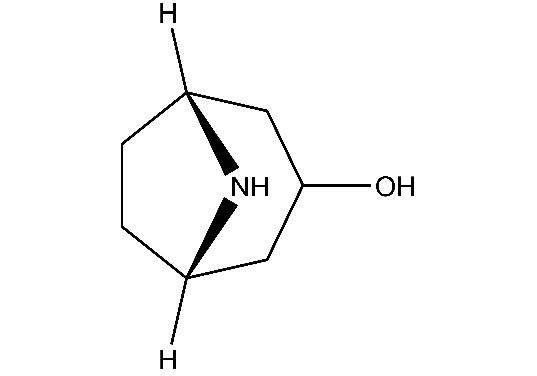
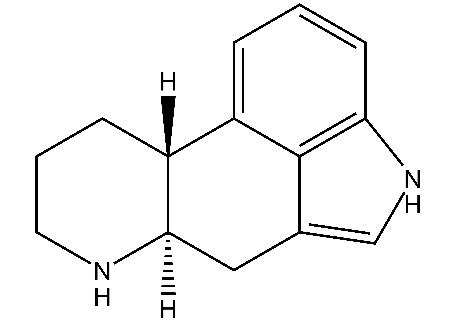
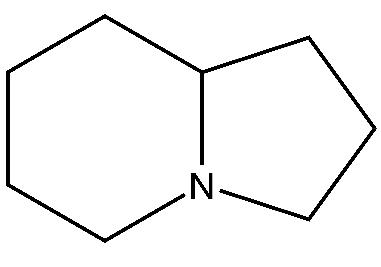
The phytochemicals of this genus include active compounds such as nortropene, ergoline, and indolizidine alkaloids ( Fig. 1 -3), phenolic compounds, coumarins, norisoprenoids, diterpenes, flavonoids, anthocyanosides, glycolipids, and triterpenes. 9 In recent years, there has been a renewed popular interest in the use of plants of the genus Ipomoea for the treatment of diseases (Table 1). 10 , 11 , 12 , 13 , 14 , 15 , 16 , 17 , 18 , 19 , 20 , 21 , 22 , 23 , 24 , 25 , 26 , 27 , 28 , 29 , 30 , 31
| Genus | Traditional uses | Ref. |
|---|---|---|
| I. aquatica | Treatment for diabetes, purgative, diuretic, fever and emetic. | 10-12 |
| I. batatas | The leaves have been used as an aphrodisiac, astringent, bactericide, and fungicide. Sweet potato is used in the treatment of asthma, burns, insect bites, fever, and diarrhea. It has also been consumed to treat anemia, hypertension and diabetes. | 13-18 |
| I. carnea | Used in the treatment of hypertension, anxiolytic, sedative and anticonvulsant. | 19-21 |
| I. digitata | The root is used as a tonic, aphrodisiac and for constipation. | 22 |
| I. indica | Used as a purgative and healing of broken bones. | 23 |
| I. pes-caprae | Used as a purgative, anthelmintic and dysentery. | 24,25 |
| I. purpurea | Used as a diuretic, to stop bleeding, as a purgative, and to treat syphilis. | 26 |
| I. stans | Used as a purgative, in epileptic attacks and to soothe the nerves. | 27,28 |
| I. stolonifera | Used as a diuretic, to treat postpartum pain, stomach problems, inflammation, swelling, and wounds. | 29-31 |
IPOMOEA STANS
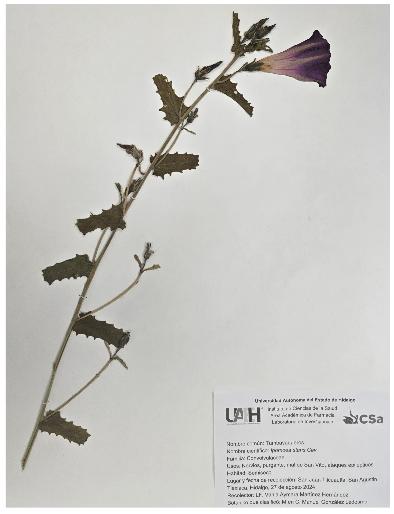
Ipomoea stans Cav. ( Fig. 4 ) is a plant popularly known as "tumbavaqueros", "espantalobos", "espantavaqueros", "campanita", "Santa María del campo", and "pegajosa". It is found in the states of Hidalgo, San Luis Potosí, Guanajuato, Querétaro, Coahuila, Estado de México, Veracruz, Jalisco, Michoacán, Oaxaca, Zacatecas, Puebla, Chiapas and Guerrero. 27 It is a plant endemic to Mexico and commonly found in tropical and warm temperate regions. Its habitat is primary vegetation, ruderal vegetation. It is distributed across bioclimatic zones such as grasslands and xerophilous scrublands. 28
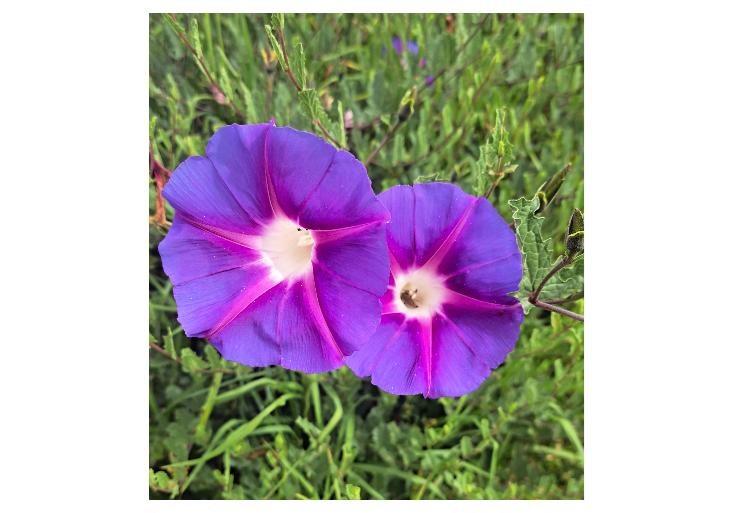
The morphology of I. stans is a perennial herbaceous plant that blooms from May to October depending on the region. 32 It is upright, branched, and robust. Its stem is covered in trichomes. The leaves are alternate and oblong. The flowers have a calyx with five sepals and a purple corolla. Its fruits and seeds are dry and enclosed in ovoid capsules ( Fig. 5 ). Finally, its root is characterized by having possessing a well-developed underground stem. 33 ,34
Isolated Compounds from Ipomoea stans
Scientific interest in these plants has increased due to the characterization of their chemical properties and the identification of new active ingredients in the formulation of new medications. 35
The seeds of plants of the genus Ipomoea contain numerous ergot alkaloids, including ergoline and its derivatives ergine and ergometrine, used as dopaminergic agonists, among other applications.
In 1992, Enriquez et al. isolated a mixture of glycosidic acids from I. stans. Basic hydrolysis allowed the isolation of a single compound whose structure was determined using two-dimensional nuclear magnetic resonance (NMR) methods. Subsequent HPLC separation of the original mixture allowed the identification of a compound that, through 2D NMR, was shown to contain 2-methylbutanoic acid molecules linked to C-4 of the terminal quinovose and C-2 of the rhamnose, 3-hydroxy-2-methylbutanoic acid linked to C-6 of glucose, and palmitic acid forming a lactone at C-3 of rhamnose. A more detailed inspection revealed that this compound was in fact a mixture of diastereomers involving different enantiomers ((2R,3R) and (2S,3S)) of 3-hydroxy-2-methylbutanoic acid attached to a chiral tetrasaccharide core. 37
Reynolds et al. in 1995 isolated and identified three new tetrasaccharide glycosides, which differ from the previously identified one in the type of short-chain fatty acids linked by esters to the tetrasaccharide nucleus, from an oligosaccharide fraction of I. stans. 38
In 2004, León et al. isolated five new tetrasaccharide glycosides, known as stansins (1-5), from the roots of I. stans and elucidated their structures using spectroscopic and chemical methods. 39
PHARMACOLOGICAL ACTIVITY OF IPOMOEA STANS
Antioxidant activity
Romero-López et al. in 2022 conducted research on the root of I. stans, with the aim of exploring its alternative use in the food industry in the form of an infusion and its prosimate chemical composition was analyzed using standardized methods, showed that the root has 10.82% moisture, 3.75% ash, 0.20% protein, 66.09% crude fiber, 0.54% ether extract and 10.00% reducing sugars. In addition, an infusion in water was prepared at an artisanal level, to which the content of reducing sugars was quantified, showing 7%. In the evaluation of the antioxidant capacity by the ABTS method, the result was 87.62% inhibition and 41.33 μmol equivalents of Trolox/g contained in the root and in the prepared infusion a 92.44% inhibition was observed with 41.33 μmol Trolox equivalents/mL, likewise, in its sensory evaluation it was accepted by the panel of consumer judges. 40
Activity in the Central Nervous System
In 1996 Contreras et al. investigated the anticonvulsant activity of the infusion and lyophilized powder of I. stans, where male Balb/c mice were given a standard infusion of the plant in place of water (IS). They were also given total lyophilized powder (IS-T) and two mixtures of compounds (IS-A and IS-B) from the plant. Their PTZ and electrical shock (ECS) seizure thresholds were tested. Data from animals that died following a high-dose IS regimen suggested mesenteric infarction. Similar results appeared after treatments with IS-T and IS-A. IS-B in particular protected mice against seizures produced by a low dose of PTZ and delayed the onset of seizures produced by ECS. IS and IS-T were also administered to male Wistar rats, where the results showed that they increased the threshold for amygdala discharges produced by cortical electrical stimulation. It was concluded that IS possesses some valproic acid-like anticonvulsant properties attributable to fraction B. Fraction A appeared to possess weaker anticonvulsant activity and some toxic properties. 41
In a 1996 study by Navarro-Ruiz et al., they analyzed the anticonvulsant activity of aqueous (AQ), ethanolic (E-OH) and chloroformic (CHL) extracts of I. stans root in adult male Wistar rats after ad libitum ingestion of the aqueous extract for 7 days, or a single oral dose of 100 mg/kg of E-OH or CHL extract. The experimental epilepsy models used were the maximal electroshock seizure induction test (MES) and subcutaneously injected metrazol (METsc). The maximum protection exhibited with MES was 80%, 36%, and 57%; and in the case of METsc, 15%, 41%, and 50% when AQ, E-OH, or CHL extract was administered, respectively. 42
Herrera-Ruiz et al. in 2007 investigated the activity of I. stans root ethyl acetate extract (IS-EAE) on the central nervous system (CNS). The administration of IS-EAE significantly reduced spontaneous motor activity and increased GABA release in the cerebral cortex of mice. These results suggest that IS-EAE possesses anxiolytic and anticonvulsant properties, and could have a potential sedative effect, probably through a GABAergic system. 43
Neuroprotective activity
In 2014, a study by León-Rivera et al. isolated stanisines from the roots of I. stans and evaluated them as neuroprotectors in rats. Pretreatment with stansine 6 inhibited kainic acid-induced seizures in rats, reduced the degeneration pattern in the CA3 region, decreased astrocytic reactivity, and reduced the expression of IL-1β and TNF-α induced by kainic acid. The results suggest that stansine 6 has neuroprotective activities. 44
Antispasmodic activity
In a study conducted by Perusquía et al. in 1995, they investigated the effects of aqueous extracts of various plants, including the roots of I. stans, on the isolated thoracic aorta of male Wistar rats precontracted by noradrenaline (NA). In all cases, the aqueous extracts significantly and concentration-dependently inhibited, the maximum contractile response induced by NA in the aorta. Thus, the results validate the use of I. stans as an antispasmodic agent in Mexican folk medicine. 45
Insecticidal activity
In 2019, Reyes-Silva evaluated the insecticidal activity of I. stans on corn weevils (Sitophilus zeamais) with ethanolic extracts at different concentrations. The weevils that were subjected to the ethanolic extracts showed greater mortality than the synthetic insecticide, with the flower and stem parts showing greater insecticidal activity. The results contributed to corroborate the traditional use of I. stans in the community. 46
CONCLUSIONS
Plants of the genus Ipomoea have long been used in folk medicine to treat a wide range of pathological conditions. In recent years, scientific interest in Ipomoea species has increased considerably. Substantial advances in the chemical and pharmacological understanding of this genus have supported this trend. Pharmacological studies have confirmed some traditional uses. However, although there are various specialized works, there remains a broad field of research on species of this genus, for the identification of more bioactive compounds and evaluation of their efficacy and pharmacological effects.
References
- Meira M da Silva EP David JM David JP Review of the genus Ipomoea: traditional uses, chemistry and biological activities Rev. Bras. Farm. 2012 22 3 682 713
- Alonso-Castro AJ Maldonado-Miranda JJ Zarate-Martinez A Jacobo-Salcedo MR Fernández-Galicia C Figueroa-Zuñiga LA et al Medicinal plants used in the Huasteca Potosina, México J. Ethnopharmacol. 2012 143 1 292 8
- Villarreal-Ibarra E García-López E López P Palma-López D Lagunes-Espinoza L Ortiz-García C et al Plantas útiles en la medicina tradicional de Malpasito-Huimanguillo, Tabasco, México Polibot. 2014 37 109 34
- Villaseñor Jl Checklist of the native vascular plants of Mexico Rev. Mex. Biodivers. 2016 87 3 559 902
- Noor F Tahir ul Qamar M Ashfaq UA Albutti A Alwashmi ASS Aljasir MA Network Pharmacology Approach for Medicinal Plants: Review and Assessment Pharmaceuticals 2022 15 5 572
- Markert A Steffan N Ploss K Hellwig S Steiner U Drewke C et al Biosynthesis and Accumulation of Ergoline Alkaloids in a Mutualistic Association between Ipomoea asarifolia (Convolvulaceae) and a Clavicipitalean Fungus Plant. Physiol. 2008 147 1 296 305
- Goldmann A Message B Tepfer D Molyneux RJ Duclos O Boyer FD et al Biological Activities of the Nortropane Alkaloid, Calystegine B 2, and Analogs: Structure−Function Relationships J. Nat. Prod. 1996 59 12 1137 42
- Zhang J Morris-Natschke SL Ma D Shang X-F Yang C-J Liu Y-Q et al Biologically active indolizidine alkaloids Med. Res. Rev. 2021 41 2 928 60
- Srivastava D Rauniyar N Medicinal Plants of genus Ipomoea 1st ed Mauritius Lambert Academic Publishing 2020 1 94
- Salahshoor MR Abdolmaleki A Shabanizadeh A Jalali A Roshankhah S Ipomoea aquatica Extract Reduces Hepatotoxicity by Antioxidative Properties following Dichlorvos Administration in Rats Chin. J. Physiol. 2020 63 2 77 84
- Umar KJ Muhammad MJ Sani NA Muhammad S Umar MT Comparative Study of Antioxidant Activities of the Leaves and Stem of Ipomoea aquatica Forsk (Water Spinach) Niger. J. Basic. Appl. Sci. 2015 23 1 81 4
- Malalavidhane S Wickramasinghe SM Jansz ER An aqueous extract of the green leafy vegetable Ipomoea aquatica is as effective as the oral hypoglycaemic drug tolbutamide in reducing the blood Sugar levels of Wistar rats Phytother. Res. 2001 15 7 635 7
- Ludvik B Waldhäusl W Prager R Kautzky-Willer A Pacini G Mode of action of ipomoea batatas (caiapo) in type 2 diabetic patients Metabolism. 2003 52 7 875 80
- Boukhers I Morel S Kongolo J Domingo R Servent A Ollier L et al Immunomodulatory and Antioxidant Properties of Ipomoea batatas Flour and Extracts Obtained by Green Extraction Curr. Issues. Mol. Biol. 2023 45 9 6967 85
- Pochapski MT Fosquiera EC Esmerino LA Dos Santos EB Farago PV Santos FA et al Phytochemical screening, antioxidant, and antimicrobial activities of the crude leaves′ extract from Ipomoea batatas (L.) Lam Pharmacogn. Mag. 2011 7 26 165 70
- Ji C Zhang Z Chen J Song D Liu B Li J et al Immune-Enhancing Effects of a Novel Glucan from Purple Sweet Potato Ipomoea batatas (L.) Lam on RAW264.7 Macrophage Cells via TLR2- and TLR4-Mediated Pathways J. Agric. Food. Chem. 2021 69 32 9313 25
- Sun H Feng Y Zhang J Zhang R Ning F She Z et al Gastroprotective effects of polysaccharides from purple sweet potato (Ipomoea batatas (L.) Lam) on an ethanol-induced gastric ulcer via regulating immunity and activating the PI3K/Akt/Rheb/mTOR pathway Food. Funct. 2024 15 12 6408 23
- Majid M Farhan A Baig MW Khan MT Kamal Y Hassan SSU et al Ameliorative Effect of Structurally Divergent Oleanane Triterpenoid, 3-Epifriedelinol from Ipomoea batatas against BPA-Induced Gonadotoxicity by Targeting PARP and NF-κB Signaling in Rats Molecules. 2022 28 1 290
- Fatima N Rahman MM Khan MA Fu J A review on Ipomoea carnea: pharmacology, toxicology and phytochemistry J. Complement. Integr. Med. 2014 11 2 55 62
- Gotardo AT Lippi LL Violin KB Andrade Forell Bevilacqua EM Górniak SL The effect of Ipomoea carnea on maternal reproductive outcomes and fetal and postnatal development in rats Toxicon. 2021 190 3 10
- Kumar Rout S Madhab Kar D Sedative, Anxiolytic and Anticonvulsant effects of different extracts from the leaves of Ipomoea Carnea in experimental Animals Int. J. Drug Dev. & Res. 2013 5 2 232 43
- Singh V Srivastava V Sethi R Ipomoea digitata Seed Gum and the Gum-g-polyacrylamide: Potential Pharmaceutical Gums Pharm. Biol. 2004 42 3 230 3
- Abbott IA Shimazu C The geographic origin of the plants most commonly used for medicine by Hawaiians J. Ethnopharmacol. 1985 14 2–3 213 22
- Akinniyi G Lee J Kim H Lee JG Yang I A Medicinal Halophyte Ipomoea pes-caprae (Linn.) R. Br: A Review of Its Botany, Traditional Uses, Phytochemistry, and Bioactivity Mar. Drugs. 2022 20 5 329
- da Silva Barth C Tolentino de Souza HG Rocha LW da Silva GF dos Anjos MF Pastor VD et al Ipomoea pes-caprae (L.) R. Br (Convolvulaceae) relieved nociception and inflammation in mice – A topical herbal medicine against effects due to cnidarian venom-skin contact J. Ethnopharmacol. 2017 200 156 64
- Pereda-Miranda R Rosas-Ramírez D Castañeda-Gómez J Resin Glycosides from the Morning Glory Family Fortschr. Chem. Org. Naturst. 2010 92 77 153
- Carranza E Flora del Bajío y Regiones Adyacentes, Fascículo 151: Familia Convolvulaceae Flora del Bajío y Regiones Adyacentes 1st ed México Instituto de Ecología AC 2007 1 140 En: Rzedowski J, Calderón de Rzedowski G, editors.
- Alcántar-Mejía J Carranza-González E Cuevas-García G Cuevas-García E Distribución geográfica y ecológica de Ipomoea (Convolvulaceae) en el estado de Michoacán, México Rev. Mex. Biodivers. 2012 83 3 731 41
- Noda N Takahashi N Kawasaki T Miyahara K Yang CR Stoloniferins I–VII, resin glycosides from Ipomoea stolonifera Phytochemistry. 1994 36 2 365 71
- Noda N Takahashi N Miyahara K Yang CR Stoloniferins VIII–XII, resin glycosides, from Ipomoea stolonifera Phytochemistry. 1998 48 5 837 41
- Cai C Chen Y Zhong S Ji B Wang J Bai X et al Anti-Inflammatory Activity of N-Butanol Extract from Ipomoea stolonifera In Vivo and In Vitro PLoS. One. 2014 9 4 e95931
- Austin DF Huáman Z A synopsis of Ipomoea (Convolvulaceae) in the Americas Taxon. 1996 45 1 3 38
- Wood JRI Muñoz-Rodríguez P Williams BRM Scotland RW A foundation monograph of Ipomoea (Convolvulaceae) in the New World PhytoKeys. 2020 143 1 823
- Bromberg L Best Practices for the Conservation and Preservation of Herbaria The iJournal. 2020 6 1 1 13
- León-Rivera I Herrera-Ruiz M Estrada-Soto S Gutiérrez MC Martínez-Duncker I Navarrete-Vázquez G et al Sedative, vasorelaxant, and cytotoxic effects of convolvulin from Ipomoea tyrianthina J. Ethnopharmacol. 2011 135 2 434 9
- Nowak J Woźniakiewicz M Klepacki P Sowa A Kościelniak P Identification and determination of ergot alkaloids in Morning Glory cultivars Anal. Bioanal. Chem. 2016 408 12 3093 102
- Enriquez RG Leon I Perez F Walls F Carpenter KA Puzzuoli FV et al Characterization, by two-dimensional NMR spectroscopy, of a complex tetrasaccharide glycoside isolated from Ipomoeastans Can. J. Chem. 1992 70 3 1000 8
- Reynolds WF Yu M Enriquez RG Gonzalez H Leon I Magos G et al Isolation and Characterization of Cytotoxic and Antibacterial Tetrasaccharide Glyclosides from Ipomoea stans J. Nat. Prod. 1995 58 11 1730 4
- León I Enríquez RG Gnecco D Villarreal ML Cortés DA Reynolds WF et al Isolation and Characterization of Five New Tetrasaccharide Glycosides from the Roots of Ipomoea stans and Their Cytotoxic Activity J. Nat. Prod. 2004 67 9 1552 6
- Romero-López MR Saviñon-Álvarez SA López-Cázares M Actividad antioxidante de una infusión de raíz de Ipomoea stans Rev. Int. Socio-Inn-Tec. Alti. 2022 2 2 38 44
- Contreras CM Chacón L Enriquez RG Anticonvulsant properties of Ipomoea stans Phytomedicine. 1996 3 1 41 4
- Navarro-Ruiz A de la Mora GP Villanueva-Michel MT Dominguez-Rodriguez JR Bastidas-Ramirez BE Quezada-Arellano JD et al Anticonvulsant Effect of Aqueous, Hydroalcohol and Chloroform Extracts from Ipomoea stans Root in the Rat Phytother. Res. 1996 10 3 242 4
- Herrera-Ruiz M Gutiérrez C Jiménez-Ferrer E Tortoriello J Mirón G León I Central nervous system depressant activity of an ethyl acetate extract from Ipomoea stans roots J. Ethnopharmacol. 2007 112 2 243 7
- León-Rivera I Villeda-Hernández J Campos-Peña V Aguirre-Moreno A Estrada-Soto S Navarrete-Vázquez G et al Evaluation of the neuroprotective activity of stansin 6, a resin glycoside from Ipomoea stans Bioorg. Med. Chem. Lett. 2014 24 15 3541 5
- Perusquía M Mendoza S Bye R Linares E Mata R Vasoactive effects of aqueous extracts from five Mexican medicinal plants on isolated rat aorta J. Ethnopharmacol. 1995 46 1 63 9
- Reyes-Silva JA Actividad insecticida de Ipomoea stans Cav. sobre Sitophilus Zeamais Uno Sap. Bol. Cient. Esc. Prep. No. 1. 2019 1 2 1 3